Thursday, 5 March 2015
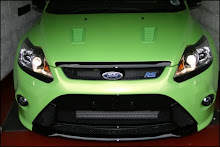
Ford Focus RS
Icons: Renaultsport Clio 182 Trophy
Grudge match approaches
Saturday, 29 June 2013
Caterham R500 Superlight
Okay, so it's not quite as spartan as the Morgan Three Wheeler I was lucky enough to drive a few weeks ago, but it's still pretty compromised. The beauty of a Caterham creation is, like the aforementioned Malvern-based car, its simplicity. There's nothing too complicated, nothing too extravagant. They offer pure, raw and undiluted driving thrills and cars just don't get any better than this. So they do offer similar things, but whereas the Three Wheeler had a modest power output, this one’s got more than three times more…
You're in awe of it when you first clasp eyes on it, and not just because of its bright green paint. It's such a revered car, this one. The little carbon details aren't particularly well finished but they nod to its weight-saving measures and it's such a cool thing. It's so small parked up next to ordinary family hatchbacks and you just know it's going to be an absolute riot to drive even when it's stationary.
Its name immediately stirs up thoughts of brutal speed. Superlight means exactly what it says: it weighs just 506kg. That weight figure's astonishing on its own and would make 80bhp feel fast, but this R500 has 263bhp. Gulp. The 2.0-litre that powers it is a highly-fettled bit of kit. The K-series engine is now long gone and in its place is a Ford Duratec unit - thought to be more robust and better to tune - which gives the featherweight car a power-to-weight ratio of 528bhp per ton, 7bhp more than a Bugatti Veyron...
So it's a formidable thing, then. Added to its already extensive armoury is its gearbox, for it's got a trick sequential one. This car was the first Caterham to feature this as a £2,950 optional extra and it just adds to the whole appeal of a car of this ilk. Let's face it, this is tailored for the wealthy enthusiast at a shade under £40,000 and is never going to be used as a day-to-day commuter, so why not go all out and spec it as the ultimate?
Perform that duty by pushing its starter button and your ears pick up the sound of a typically tuned engine note as the noisy side exhaust clatters. The idle's bumpy and it's certainly not happy being cold. It's a raucous noise which signals the R500's intent. Fasten the harness, wiggle in the carbon-backed seat to get a little settled and breathe it in. The bare carbon dash is lovely, if a little shiny when the sun catches it, the view out's as good as any car I've ever driven and it just feels so very right. The louvered bonnet gives a tantalising glimpse at what's making the noise; you feel immediately at home in the R500.
There is trepidation, though. You'd be a fool to mess with a notoriously tail-happy rear-driver with over 260bhp and take it lightly, so you're wary of its capabilities. I don't take much sought-after solace when Richard Barraclough, this car's guardian for today - who's crammed in next to me - reminds me of the Caterham's neck-jarring turn of speed by mentioning its tendency to follow ruts in the road when under hard acceleration...
Thoughts of a gloriously smooth empty track springs dreamily into my mind but unfortunately we won't get to experience the R500 there, although Richard has ventured out onto the track in this particular example.
"It's exactly how you'd expect: fast, furious and completely fun," he said. "The handling balance is lovely and although it can be a handful if you want, it's actually quite forgiving."
We're in a leafy part of Huddersfield in a small village called Almondbury and although we've only covered a handful of miles on the R500's track-biased Toyo R888s, it's already leaving an impression. The steering's beautiful. The weight of it is perfect and every surface change is given to you straight away. There's no vagueness, just immediate response. By far and away it's the best steering I've ever come across and the size of its steering wheel just makes everything better. Your hands dwarf it but the go-kart-like feel adds to the drama.
Next up to shine is the gearbox. Given the fact that we've barely broken 30mph and have only gone to fourth gear it's already showing its worth. The whine and mechanical clatter of the Quaife-developed 'box makes you a little giddy. It adds to the racer feel and you can never tire of the way it shifts. Okay, semi-auto paddles are now retiring traditional manuals in most forms of car but this sequential's a breath of fresh air and is absolutely great. Pull the protruding aluminium lever towards you and it clunks into first. Its clutch is weighty - as you'd expect - but the 2.0-litre is rich in torque so even if your shaking left leg's hesitant on the power, it's actually quite difficult to stall. This is my first time using a sequential gearbox so of course I'm sat there, harnessed up with a wide-eyed child-like grin plastered across my face. This is great to use and although its action is very crude, the short-throw, rifle-like response of it is a magnificent thing to control.
The roads are getting a little narrower, I'm unfamiliar with their direction changes but there's a sign ahead which has a diagonal black line across a white background, no cars are in sight and we're primed in second gear. Richard knows what's coming and I duly bury the throttle. What happens next will stay with me for the rest of my life: a wiggle, a spin of the rear tyres, a momentary loss of traction and then a huge dose of power. The tiny steering wheel wriggles about but I hold it tight and keep committed, way past 8,000rpm until the last red shift light appears. The noise builds and builds and it all happens so quickly - 30mph to three figures is ludicrously fast. Engage another gear by pulling the lever back and again, there's instant momentum. What a car. Even accelerating on a straight road is brutally intense.
You don't even have to worry about the clutch on upshifts. Full-throttle changes can be executed without the need to use your left foot and so you can just concentrate fully on the road ahead and the blurriness of everything that you're passing.
Slow down and you're alive with adrenaline, but a little gobsmacked at what you've just witnessed. Nothing I've ever driven felt as brutal as that full-on second gear power. The brakes, thankfully, are equally up to the job and as there's no ABS on the R500, you never get that grainy, disconcerting pedal feel when you're relying on them to stop you after yet another run through second and third. When the roads get bumpy and rutted, the lack of ABS is worth its weight in gold.
Hugely powerful cars often come with weight and size, but again the little Caterham does not. Even on the tightest, twistiest road it feels narrow, so although that intimidating rush of power's only a brush of the throttle away, its width is never daunting.
Richard directs us up high above Huddersfield, which is sat in the valley-like setting below us. The wind's stronger up here but he's promised his favourite bit of local tarmac and claims nothing could get near the R500 up here. I nod, knowing that his big claim's most definitely true. Think about that: this is a winding country lane, with well-sighted bends and third gear straights. You could have a Bugatti Veyron behind and still the plucky Brit would be gone, with a wiggle of its rear Toyos and a 263bhp hit.
Richard mentions the car's launch control and urges me to try it out. At first I think it's a little geeky, a bit of a gimmick in a car that's built on simple foundations. However, my curiosity is still there so I am quite keen to try it, having witnessed the brutal, no drama acceleration of a Nissan GT-R with its launch mode engaged. It was a £350 option on the R500, Richard tells me. Caterham claim it can deliver a 2.8 second sprint to 60mph...
It's quite straight forward. Depress the clutch, pull back for first gear and hold a small button on the carbon fibre dash. Floor the throttle now and the revs are automatically held at 4,500rpm. It feels wrong to put the engine through this much duress but the revs stay there without protest, urging you to drop the clutch. Do that, and the rears momentarily spin but just as you think you've found out the gimmick, it miraculously digs in and leaps off the line. Glance down and the digital speedo misses out many numbers are rockets past 60 in the blink of an eye. First, second, third. They're all gone and the brutal power just does not seem to diminish even into fourth.
I'd hate for you to think that it's a one-dimensional car which does nothing but thrill and scare its occupants, though. Although its insane turn of speed is hugely memorable, the R500's party piece is its handling. Now, I'm not going to claim that I balanced its rear on the throttle in a Chris Harris-style slide but there's a lovely way in which it attacks a road. Sure, the rear can be lively if you're heavy footed, but most of the time the R500 can be coaxed into fast progress without you having to react to its wayward back end. In some powerful rear-wheel drive cars you're aware of corners and in some cases, you fear it letting go when you're attacking the turn. While there's always a vast amount of respect for the R500, I found it a great tool to dissect a road and utterly beguiling to drive quickly. That brutal power, the ABS-free brakes, its hugely responsive steering and the massive amounts of grip the R888s generate makes it one of the fastest point-to-point cars that's ever been made.
Richard points out that his favourite bit of local road's coming up and shouts above the wind. "It's a fast left-hander, do not back off," he implores. That's the thing with the R500: back off mid-corner and that's when you're vulnerable. Stay committed and it stays true, diving in and gripping tenaciously. I pick out the corner in the distance and we're bounding down the straight part, rapidly approaching. A dab of brakes, turn in and you can feel the staggering tyres clawing the tarmac. The steering wheel tugs as it finds a rut but the body stays in check and I'm concentrating more than ever before. Stay committed, feed in the power without being daft and the R500 guides you round. The road straightens and the throttle's soon buried and the road-side foliage is a green, hazy blur. The road soon veers right, the Caterham's in third with 4,000rpm showing and again, the throttle's soon planted. The car stays faithful, mesmerising me with its precision, responses and blinding pace.
It's all too easy to fall into a hypnotising, licence-losing rhythm with the R500. The way it goes about its business alters your perception of how fast a road car can be. Respect it, drive accordingly and the car's faithful. Jump in in a Clarkson-like manner and it'll bite - it will end up sideways. The cornering ability, the torque-rich low-down grunt and the ballistic delivery past 5,000rpm. I could drive it all day and never once lose interest.
We're on the way back now and it's a sad feeling. The R500 has left a longing impression and it's a shame that I've driven it in a way as no other car that I'll drive will be as fast, rewarding and as great as this little one. Even trundling along behind smoking diesels is an occasion, and as we pull into its resting place it's with regret that I have to get out. I clamber out and I’m buzzing with adrenaline.
"It's good, isn't it?" Richard questions.
"The best," I answer.
Thanks for the memory, R500 Superlight. You're the best car I've ever driven.
Monday, 3 June 2013
Morgan Three Wheeler
Glance down and you'll notice the Ariel Atom-like front suspension arrangement. You get a little mesmerised by it; you can see the damping absorbing ruts and you chuckle as the thin tyres bob up and down and search for smooth tarmac. On these roads they're always busy.
Strangely, those drives came in affordable cars. Having driven lots of exotica in my short five-year driving career, they have no doubt left their mark but tellingly, it was in two French hot hatches that I'd had my best moments - up until now.
The simplicity of these two cars - the Peugeot 106 Rallye and the Renaultsport Clio 182 Trophy - are what makes them great. They have no pretense, no complications. They're simply great because they're transparent; they don't hide behind electronic wizardry and you're in charge. I love cars of this ilk and the Morgan's bristling with that style.
It's easy to be a little disappointed by the motoring world in 2013. There's not much that has a similar ethos, and that's where the little Morgan comes in and gives you faith in the sea of monotonous BMW X3s and smoke-belching diesels. In performance cars, characterful, naturally aspirated engines are being replaced by dull-yet-potent smaller capacity turbocharged ones, rich in torque but woefully devoid of character.
We're at the cusp of a dramatic change in regulations. Emissions are high on the agenda and it's affecting all of our much-loved marques. The Mercedes C63 AMG is adored for its tyre-shredding, wild character, yet its fabulous V8 is almost certainly going to be replaced with a smaller powerplant with - you guessed it - forced induction. Even Porsche, who, in my opinion, are the purveyors of the finest drivers' cars in the business, have changed its flagship driving machine.
The all-conquering GT3 has been a favourite for everyone who's driven it since its 1999 debut. A car which was pared-back just the right amount, had an ever-so-slight weight reduction and was great because it did everything brilliantly. The forthcoming 991-generation 911 GT3 is to go without one of its best qualities: its manual gearbox.
Yes, Porsche has done the unthinkable and ditched its fabled manual. In its place there's the very good PDK 'box, but as quick as the gear changes are it's simply not a match for that magnificent Porsche manual.
Even supercars aren't immune from the drastic changes. The recently-revealed, hugely expensive flagships from Ferrari, McLaren and Porsche aren't as simple as their forebears. The LaFerrari (I know - a ridiculous name) uses F1-inspired KERS technology, as does the McLaren P1, not to mention a whole host of other technological features. It's fair to say they're moving with the times and these cars are at the peak of technology, but does that make them better? I'm undecided. Their geekery's at an all-time high, and whilst they're no doubt at their optimum in 2013, it's just getting a bit boring.
There are of course two sides to it, and the amalgam of this debate came to a head in the Ferrari Enzo. Replacing arguably the last analogue supercar, the F50, the difference between the two was night and day. The Enzo, although still powered by a thunderous V12, was overflowing with technology. It had the most advanced F1-style gearbox with super-fast, neck-jerking changes. However, this technology came with a drawback: its weight.
Proof of this trend doesn't come more starkly than in the form of Porsche's most expensive car, the 918 Spyder. As a natural successor to the timeless, V10-engined Carrera GT, they're incomparable.
The Carrera GT was remarkably simple. It was relatively simple, with a gear knob topped with balsa wood, a carbon structure, razor sharp throttle response and was the pinnacle in precision. It took no prisoners, yet its endearing character has cemented its place in supercar folklore. That spine-tingling V10 delivered just over 600bhp and its looks were astonishing. Even now, the ten-year-old design looks incredible. I'd take one over an Enzo every day of the week.
In the last few months, we've seen the rise of the aforementioned 918 Spyder, a car which is far more controversial than the simplistic Carrera GT. Why? It uses batteries. It's powered initially by a 600bhp V8, but it's accentuated by cells which add a couple of hundred horsepower onto its total. Great, you might think. But then its weight's revealed and a collective gasp is heard, for it tips the scales at over 1700kg.
You might not think a few hundred kilos is cause for concern, but no technology advances can iron out the bulk which inevitably dumbs the steering and feel of the car. No matter which side of the analogue/digital fence you fall on, the next few months are certainly set to be intriguing as the head-to-head battles commence.
A new car which flicks a strong middle finger up at the technology brigade is the Three Wheeler. It's single-handedly standing up to the modern-day rules and conformity, and I applaud Morgan for having the nerve - and nous - to do it.
In the new Three Wheeler you get proper old-school grunt. It's powered by a two-cylinder engine which directs its power to the rear wheels, or should I say rear wheel... The Three Wheeler has one wheel at the back and two at the front. Unlike technology-obsessed marques, Morgan are bucking the trend and they're returning to their roots. You see, three-wheeled creations were what Henry Frederick Stanley Morgan formed the company with and were on sale for 40 years afterwards.
The quirky Malvern-based firm have revived it though, and the £30,000 2013 Three Wheeler is fantastic.
Purity and intimacy are what cars lack in most cases. They're filled with so much wizardry that it's hard to just enjoy the raw experience. Anyone with any sense wouldn't go without them on their day-to-day vehicles as they give safety, but on specialist cars they very much tend to get in the way.
Clasp eyes on a Three Wheeler and it's love at first sight. You're amazed by its size (incredibly small), its width (again, incredibly small) and its look. It's such a unique car. There are two old-fashioned, Caterham-style headlights which sit up on beautifully fashioned metal, there are two thin-rimmed wheels with cycle-like spokes and a glorious V-twin motorbike engine that sits proudly, visible to all.
It's a fantastic thing to behold. When its wooden body shell's being fashioned, it would've been simple to make this 'car' into a boat - its shape's that similar.
Getting in the thing isn't particularly easy, or elegant. You kind of shimmy your way in: step over the tub so one foot's in, then hold onto the bodywork and hoist yourself in. Getting out is even harder...
As soon as you're in its seat you just smile. 'Quirky' could be deemed as an overused adjective with this marque, but it's so fitting. Nothing's like this car - it's completely unique. Look ahead and there are two pieces of perspex, one in front of the driver and one in front of the passenger. They're largely useless, as they're only a few inches high so they never really protect the driver from anything that's flying, so a helmet's advisable.
There's a circular steering wheel which is laughably large given the size of the car, a chunky gear knob, a handbrake and the simplest dials you've ever seen. It's great. There might not be a lot in here but you're surrounded by air, visibility's inevitably great and it just feels right. The seats - lined in quilted leather in a diamond pattern - aren't particularly supportive but the driving position whilst in them is a strange one. You kind of feel like a little kid playing in your dad's car as you're holding onto a bus-sized steering wheel. It's nearly in line with your head. Its driving position isn't perfect because of this but in a crazy way, it's just fantastic. Pure sense of occasion. Yes, I'm even praising it for having a flawed driving position.
Start up the motorbike engine and it slowly, lazily responds after a second or so. Even this is an occasion as its starter button hides beneath an aircraft-style toggle cover. Flick it up, push the button and the beast grumbles. It's not a fizzing motor that's hyperactive and craving revs. It just sits there up front vibrating, reluctant to wake up. It's so strange as its character makes you think you're sat in a 30-year-old car, not a brand new one. You get that same feeling as you would when you're sat in a temperamental classic car; there's trepidation there as it feels like it may or may not start. You get that pure unadulterated joy when it does cough into life. It's built by a company called S&S, who are famed for their relationship with Harley Davidson. Built to Morgan's specification, the 2.0-litre produces 80bhp and 103lb ft of torque. The stats, particularly the latter, are mightily impressive for a bike motor, and as the engine reaches its peak at just 3,250rpm, the Three Wheeler always feels perfectly situated to pile on speed.
Once it's warm, the lumpy idle sits at just over 1,000rpm and the throttle response is actually rather sharp - something I didn't expect. Its clutch is weighted nicely with just the right amount of inertia and its five-speed 'box is slick and precise. The gearbox is actually from a Mazda MX-5 and it's a great combination.
Top Gear lovers won't get this car. They'll be disappointed by its 80bhp power figure, and they'll loathe it as its solitary rear wheel makes prolonged power sliding redundant. However, as it only weighs just over half a tonne, it's actually pretty brisk. It'll keep most junior hot hatches in sight to 60mph, but it's its torque that's the most memorable aspect of its performance. You see, as its peak's reached at a shade over 3,000rpm, you're perfectly situated no matter which gear you're in.
It's just an assault on your senses. You're driving along with the world rushing by in a blur. It's not fast by any means, but who cares when you're having this much fun? Speed is irrelevant in the Three Wheeler, and that's something which I thought I'd never say. People of all ages look, point, stare and frantically click their phone's camera to capture this glorious little car. In many expensive cars you kind of get the sense that some people think you're a bit of an idiot. Flashy, perhaps arrogant. Drive a loud Ferrari in look-at-me red and you get a mixed response. In the Morgan it's just pure adulation. It says to the world that you're a pure enthusiast who doesn't much care for power or gimmicks. It says that you're a fan of simple machinery, yet you're not fussed about headline-grabbing power figures. I love that.
Its steering's so informative. On challenging roads it shines and gives instant feedback. Its weight's just so and you're filled with confidence as you have faith in the way in which the Three Wheeler steers. You can't help but feel that its engine out front has a big influence on this; it's so direct and precise. The best thing is that you can actually see the process being done by the car in front of your eyes. Turn in and watch the components do their thing, feel the response through the wheel and get on the gas. This is what driving's all about. You're an integral part of the process, interacting, working with it. No other production car gives this feeling. Step on the brakes and there's great feel, an abundance of stopping power and again, it just builds your confidence.
The Morgan Three Wheeler is completely beguiling and an absolute joy from start to finish. It puts the biggest grin on its driver's face and finally, a modern-day car has returned to simplicity. It celebrates motoring for the sake of motoring, and even when you're trundling along at 30mph it's utterly mesmerising. It doesn't care about yawn-inducing Nurburgring times or being high up on the Top Gear test track board. All it wants to do is show off its character and I for one absolutely adore it. Drive a Morgan Three Wheeler and it rekindles that magic of driving. I've had another perfect drive.
Tuesday, 21 May 2013
The Perfect Drive
When the moment comes, they seem to happen naturally. I remember several truly memorable drives when I was a passenger though, in my dad's Clio Trophy.
The first one which stood out was chasing a TVR Chimaera along the famed yet strangely deserted Snake Pass. The brutish convertible was being driven within an inch of its life - its V8 blaring - but yet still this little red hot hatch was keeping with it, sucking up its exhaust fumes like a maniacal junkie. It was like an agile fly irritating a powerful rhino.
The second stand-out occasion was a Boxing Day jaunt to the coast. On the way home, driving along the magnificent Whitby to Pickering road, the Trophy was sensational, as was its driver. There's a particular part of that road where it dips down, veers right in a hairpin-style acute corner and the road straightens out as you then climb. It's a well-sighted part, and so overtaking isn't particularly dangerous.
I'll always remember my dad attempting what's got to be the most audacious overtake the world's ever seen. You see, I could sense what was going to happen, because every time he became frustrated by the traffic's slow progress, his left hand would irritably grab the gearstick, primed and ready for a swift change to a lower gear.
Glancing right and assessing his options as the road veered down into its lowest point before the aforementioned bend, he selected third and gunned it. Now this isn't at all audacious, but there were what must've been 12, maybe 13 cars in a tightly-packed line, so making full use of the well-sighted road he stayed committed to the overtake and it'll always be remembered by us, and of course those who witnessed it who'd remember the little Clio's masterful overtake. "Look at that absolute nutter," they no doubt said. I loved it.
With me behind the wheel, I've had a fair few memorable drives. Piloting cars like the Nissan GT-R and the Porsche 911 GT3 RS stand out, but as most of their miles were done on track, I've only had two more perfect drives on the road.
I don't know what it is about perfect drives on the road. Sure, driving flat out on the track's almost a normal thing to do; you don't go to potter around. However, brisk road driving's an almost naughty pastime. You know you're not meant to be doing it, but it feels so good to do. Speed doesn't kill; bad driving does. I'm all for driving to suit the road's conditions. If it's a built up area with a 30mph limit, then stick to it and be sensible. If you're on a deserted country road and the mood takes you, why not drop a cog or two? Fact of the matter is that when you're bounding down a challenging road, you're at your most alert. If more people paid attention to their driving on the roads, there'd be far less collisions.
My first perfect driving experience that'll stay with me for a lifetime was when I had a Bianca White 106 Rallye.
I'd taken the S2 up to the Yorkshire Dales on a sun-soaked summer evening, and everything was just so: the car was a dream, the setting was perfect, and the leather-clad Yamaha R6 rider played an Oscar-winning role.
Heading out of the popular village of Kettlewell there's a lovely bit of tarmac that snakes above the River Wharfe in the valley below. The views are great, and although it's not a remote road, if you catch it at the right time, it's brilliant. Other times it can be hellishly boring, stuck behind motorhomes and dawdling tourists.
However, catch it as I did when the sun's getting low and the tourists are well into their barbecues, it left me with a lasting impression.
I'd followed the lone biker through the village and as soon as the national speed limit signpost had appeared, the pace was considerably lifted. The road's bumpy, offset, and blind in many places - not exactly perfect for the high-revving R6 - but absolutely great for the Rallye.
The B6160 goes through Kilnsey and heads back towards Grassington, and although the Rallye's only got a smidge over 100bhp, it kept the bike in sight as the rider just could not open up any sort of advantage.
As soon as he'd annihilated the Rallye on any straight part, the car was back on its tail rekindling that giant-killing Clio Trophy magic. Thing is, that road has very few straight parts, so although the Rallye was having a thorough work out, it'd have stayed with the bike as long as the road maintained its twists and turns.
Arriving at his turn off, the biker flicked a thumbs up and away he went. What a great experience, and what's more, I doubt we barely broke the speed limit on that 60mph road. Okay, maybe just once or twice...
After having numerous adventures in my dad's Clio Trophy, I had to have one. The Rallye was sold, and a Trophy was bought. Working full-time means it's barely used on any demanding roads, but a recent free window meant a possible jaunt up to the tops of the moors.
An obligatory glance out of the window saw clear skies, and with the dry roads it was the perfect setting.
A monotonous journey to Holmfirth was done, and once you're past there the roads start getting better. A turn off towards Holme Moss is what you're first greeted with: beautiful views, but hugely bumpy roads. Get this out of the way and your ascent of the hill begins.
Long, sweeping right-handers, and equal tyre-squealing lefts. It's a great road.
You're in second and third gears around here, so although the incline's rather steep, the Trophy's always kept in its sweet spot. Turn in is lovely and the steering's beautifully weighted; the tyres finding instant traction no matter how hard you turn in.
The road's smooth and it's well-sighted, but this is just the starter of what's to come.
Reach the peak and this is my favourite part: staggering views and a ribbon of tarmac for as far as the eye can see.
You're now descending through the Derbyshire moors and it's quiet. A heart-stopping gust of wind makes its way through the front wheels so you're constantly alert, but you can use every inch of the road and take in what's coming towards you. It's not too technical but it's a great road to drive, and it's definitely one that'll live long in the memory.
It just goes to show that no matter where you are, there's a memorable moment just around the corner. It could happen when you're least expecting it, but when it happens, it makes cars worth their weight in gold.
It's hard to explain the attachment some people get to their cars. Some see them merely as a means of transportation, but buy something good and it has the ability to make you grin like an idiot. Bonds are formed and life-long memories are kept.
Tuesday, 3 April 2012
Swagger's return to The Hub (April Article)

Saturday, 31 March 2012
2012 Nissan GT-R
Nissan’s a marque that’s been on quite a roll in the past few years. They’ve been resurgent since the revised 350Z came onto the scene, scaring BMW Z4 owners with its sonorous 313bhp V6 in 2006. Since then we’ve seen the absurdly capable, supercar-slaying GT-R, the new 370Z, the hugely popular Qashqai and a whole host of eco-friendly cars such as the innovative (if a little overpriced) Leaf.
Although the indomitable GT-R has been around for a few years now, in 2012 specification the car has had its 3.8-litre, twin-turbocharged V6 massaged to give 542bhp; up 12bhp on last year’s model. The slight increase in power comes courtesy of a revised intake system and new valves, which promise to sharpen throttle response and be harder-charging past 5000rpm. It’s also good for 199mph.
Its gearbox has been honed further as well, so the already fast-acting paddle-shift changes are even quicker than before. Along with other changes to its set-up including revised dampers and stiffer springs, it’s fair to say it’s had a thorough going over. Annual revisions to models are usually insignificant, but the 2012 GT-R has been typically engineered to within an inch of its life to build upon its already formidable reputation.
It truly is a fascinating machine on every level. It's a technological wonder that's loaded with computing wizardry, and it's also monumentally fast in a way that it has no right to be. Sure, you’d expect it to be fast with 542bhp of twin-turbo grunt, but this car weighs a massive 1740kgs, so its 0-60mph claim of 2.8 seconds is quite hard to get your head around. It's that correlation between the power and weight that simply doesn't add up. The GT-R has no right to be as accelerative as it is; really there’s only the Bugatti Veyron that can match its brutal acceleration figures to 100mph. With launch control engaged there’s no fuss, just supreme tractability and this is its party piece as it's flawless off the line. For the record, 0-100mph takes just 7.1 seconds…
However, for all of its undoubted pace, it does lack in certain departments. There is an edge to the big GT-R’s look that gives it a menacing stance, but it can’t hope to compete with any flamboyant Italian offerings. You get the sense that the GT-R has been designed by an engineer, not a designer. From behind, it has the obligatory Skyline quad rear-light style that we’ve seen on the iconic R32, R33, and the R34. From the side, its coupe-style roof gives cohesion to the shape, and from the front it's a mean looking thing with chiselled bonnet vents to cool its large-capacity V6.
Inside, again it’s a disappointment. The Recaro seats are supportive and are its only saving grace, as the design’s generally cluttered and busy, with a plethora of buttons that access the car’s performance graphs, g-meters, pressure gauges and lap timers. Its driving position is undeniably good however.
Settle into the comfy bucket seat, put your right foot on the brake, press the small but vibrant red starter button on the transmission tunnel and the V6 clears its throat with a dry rasp that, strangely, sounds very like that of a Porsche flat-six. It’s got that same gruff, nasally tone emanating from it.
In manual mode, all that's required is a gentle pull on the right F1-style paddle behind the steering wheel, lift off the brake, and with a bit throttle you're away. It really is as easy as that. Contrary to what people may think, these new-generation, supremely useable supercars are just so easy to get in and drive.
It doesn’t take long to tap into the GT-R’s magic. Second gear acceleration is phenomenal; there’s no other word for it. From 30 to 70mph there's not much that could cope with its devastating turn of pace. The torque is the other notable part of the GT-R experience; it is spread out between 3200-5800rpm so there's always pulling power available wherever you are in its rev-range, and the pick-up is as brutally urgent as you'd expect. With the power band as wide as it is, turbo lag simply isn’t an issue unless you’re at really low revs. Its character is spookily familiar to a naturally aspirated engine as although there is that inevitable twin-turbo kick in its delivery, it revs to over 7000rpm as well and so the power continues.
Combined with the accurate and communicative steering, this agility helps to make the car feel lighter and smaller than you know it is. The GT-R manages to feel sharper and lighter than ever when you show it corners, and you'd swear that it was 300kgs lighter than it actually is. Turn-in is beautifully direct, its traction is spectacular and the security of its four-wheel-drive means there’s an invisible safety net. Pair of all this with the GT-R’s absurd levels of grip and you’re left with something that alters any pre-conceived perceptions of the term 'fast'.
The car’s launch control is something that just baffles your mind as well. Put your left foot on its brake, have a glance at the read out on its centre console which tells you if you’re applying 100% pressure on its pedal, bury your right foot into the carpet, and then it holds at 4000rpm awaiting your next move. Lift your left foot off its brake and what comes next is something extraordinary as the car’s technological genius just grips and goes. All that’s left to do is hold on for dear life as the G-forces build and shove you back violently into the Recaro seat. It’ll execute flawless sub three second sprints to 60mph all day long.
So then, it's got all bases covered. It's perfectly capable at dealing with the mundane stuff, and utterly brilliant when you're in the mood to get to know the car’s abilities. It somehow manages to lose a few-hundred kilos on the move and turns into a manic, brute of a machine at anything above 4000rpm. If out-and-out performance is your thing, for £75,000 the 2012 GT-R is simply unbeatable. Sure, its cabin lacks in quality when compared to its German rivals, but all of that’s forgotten when you feel the GT-R’s unrelenting surge of power. Most importantly, it just immediately feels special, and that’s surely what this car’s all about.
Nissan Juke-R
What happens when you cross a supercar-slaying, performance icon of its generation, with a popular family SUV? Although they might at first appear to be a ludicrous pairing, using elements from both has created something extraordinary.
Complete with its 480bhp GT-R sourced 3.8 twin-turbocharged V6, it’s quite hard to get your head around at first. The Juke is an odd-looking thing in its tamest of guises, but when it’s dressed in sinister matte black, sat on those familiar 20-inch GT-R alloy wheels and with a whole host of aero enhancements, there’s no denying it’s taken on some of the GT-R’s menacing styling cues and it's worked well.
Open the back doors and you’re not greeted by the usual rear seats. Your eyes meet a full competition-spec roll cage, and there are five-point harnesses for the front OMP bucket seats. It’s a bizarre thing to behold.
Getting into the driving position is quite an arduous task in itself. Once you’ve negotiated your legs over the roll cage bar, you’re immediately clasped in by the seat. It’s certainly a snug fit, but once you’re harnessed in and anticipation levels are at an all-time high, you brace yourself for what’s to come.
As with the GT-R, it’s easy to move off the line as it shares the same semi-auto gearbox. It’ll shuffle along through its speeds with consummate ease. It’s a strange thing as your eyes recognise the familiar Juke interior cues but then they catch things such as the GT-R rev counter, the speedo, and the GT-R–style G-meter screen which tells you everything you could ever need to know about how the car's behaving.
So what does a 480bhp Nissan Juke feel like on full power? It’s absolutely bonkers. Stamp on the throttle and as with its bigger brother, there’s instant traction and instantaneous momentum generated by that fantastic engine. It’s not quite as fast as the GT-R, but there are many similar characteristics in the two cars.
First up, the brutality in the way they pile on speed is evident. Zero to 60mph takes just 3.7 seconds in the Juke-R, so it’s supercar fast. Then, because the two share the same four-wheel-drive set-up, that invincible point-to-point pace is there as well. It’s also got that same feel to its responses when you’re pushing its limits as it manages to feel hugely lighter than it actually is. At 1806kg, it’s a heavy car, but you’d swear the car’s a few-hundred kilos lighter once it’s on the move. The noise is louder in the Juke-R, as inside it’s much more pseudo-racer than the GT-R is. Although there are no race-spec materials to the touch, its hip-hugging seat and harness immediately gives the driver a completely different mind-set, as opposed to the relative luxury you're used to in the GT-R.
The rear’s much more playful in the Juke-R, too. It’ll understeer at first, and then oversteer if you’re overly ambitious with the throttle. It’s not the confidence-killing type of inconsistency though, as it’s very easy to judge on the limit and the four-wheel-drive offers its driver a huge margin for error.
As Nissan only commissioned two of these incredible cars to be made, I’m honoured to have been given the opportunity to drive the Juke-R. Its engineers, RML, ought to be extremely proud of what they’ve achieved with their interpretation of the humble Juke. It shares many similarities with the sensational GT-R, but also manages to have a unique character of its own. The Juke-R truly is a revolutionary and hugely memorable creation, and although it was never destined to make it into full production, the Juke crossover is clearly a capable basis for handling a sportier set-up.
Friday, 20 January 2012
Wakefield's Monday Night Scene Has Got Its Swagger Back (January Article)

Wakefield’s Monday night scene had become stale and generic. Traditionally it’s its student night, so whilst it was generally busy, its venues for house music were pretty much non-existent, barring the resurgence of Passion Bar playing the now familiar and infectious Wakefield soundtrack of jackin’ house with pumping, dirty bass drops. Its biggest venue, Havana, has enjoyed the limelight and seen consistent numbers pouring through its doors. However, although it does give the club credibility, all of that’s taken back when you go through the doors into the main room and hear the awful chart-based pop music they’re playing.
Swagger came onto the Monday night scene and immediately saw success, with huge crowds drawing to the city especially for this event. It was the event that single-handedly spearheaded the revitalisation of Wakefield’s dwindling nightlife, and spawned a new generation of house-only clubs for the city; most notably Sub Zero and Rocco. Taking full advantage of Facebook to promote their revolutionary night, Danny Jones and Benji Kershaw rode the wave of success as crowds flocked to Swagger’s original venue, Hub.
If you’re not familiar with Hub, you could easily miss it as it passes under most people’s radar. It’s located down a side street off Wakefield’s main strip, and because it’s underground, it doesn’t stand out. Inside, it’s a small and intimate setting; low ceilings, two small rooms, and only two bar areas.
What it loses in size it sure as hell makes up for with atmosphere. Atmosphere is what Havana on a Monday is severely lacking, and to me it’s the most important ingredient in a club’s feel, so to be in Hub while Swagger was on was a great thing to witness. The brand brought Hub much deserved recognition, and the two just went hand-in-hand together and fitted like a glove.
In its first room the familiar classics from 1995-2000 played by Jonny ‘Bee’ Brown and Danny Bond gave Swagger a touch of class. It was Hub’s back room which saw those memorable, stand-out moments though with the likes of Julie McKnight belting out the anthemic ‘Finally’ over the extraordinary beats of EDX’s mix of Dubfire’s ‘Roadkill’ track. It really was one of those hair-raising moments; each and every one of the people crammed into that small place singing along, word for word. The room shook Hub’s foundations to the core, and although the infamous air conditioning of that room was dubious, it just added to Swagger’s appeal as everyone just put up with it and got on with having a great time. Every venue has its quirks, and without question the sauna-like temperature of Hub is its.
Time and time again the club and club night linked up several times a year, and never failed to pull in the crowds. Although Swagger’s got its doubters, even its most fervent critic cannot deny its impact of the city when it’s on - it becomes the talk of Wakefield. I recommend it because it’s a transparent club night so you know what you’re getting; great music, people who are like-minded and who are simply there to have a good time. Yes, vests and typical drop-crotch jeans are aplenty, but at least they’re best equipped to cope with the soaring temperatures inside…
Although it’s branched out onto the Leeds circuit too, Monday the 19th of December saw Swagger leave its spiritual home of Hub and move to Wakefield’s biggest venue, Black Flag Warehouse, for a pre-Christmas special. You sort of get the sense that the popularity of the event sadly outgrew Hub’s small proportions, so seeing it at another Wakefield venue was strange but good; strange because Hub and the early Swagger days were a match made in heaven, but good because the bigger space afforded by Black Flag meant that more people could witness the night and maybe, just maybe, the airy warehouse would be a little less humid than Hub’s back room.
What did I think? Well, the big venue was still crammed full of people, so any doubters who questioned whether Swagger could fill a large venue dissipated straight away. You just knew it was going to be a success; the layout was arena-like, so DJs were elevated above the crowd in front of you. It did lack Hub’s key trait of intimacy because of this, but you’ve got to remember that this phenomenon of a night has grown and grown into Wakefield’s undisputed king, so something had to change.
So here’s to Swagger, the sole night that kick started and breathed new life into Wakefield’s ailing Monday night scene. It’s got its critics, but that’s a sign of success as people become envious of people’s good fortune. You can never really predict the future due to the fickle nature of club nights, but there’s one thing that is for sure: Swagger will continue to be a huge success.
For more information: http://www.facebook.com/groups/483407540713/
THR Leeds
The extraordinary rise of The House Rooms in the heart of Leeds was built single-handedly by one house music obsessed businessman. In October 2002, Steve Carter purchased a dilapidated city centre building, and set about creating the space into a unique, high-end club that would be the number one destination for any discerning clubber.
Self-made Steve built his wealth on the property ladder, re-developing the skyline of Leeds city centre and riding the rise of property values. Make no mistake, he’s a major player in how you see the city today, and if the Bentley he’s driving and gold Rolex on his wrist is anything to go by, he’s been a huge success.
Its LS1 address gave the perfect location on which to attract the hordes of clubbers that transcend on the city centre on every single weekend of the year. Fast forward nine months to June 2003 and the club opened its doors for the very first time. Specialising in out-and-out house music, the clientele proved very much to be a knowledgeable crowd, keen on rekindling the golden era of the genre.
Where new club nights were springing up and growing, and in many cases ceasing every bit as quick as their initial growth, Steve’s project was consistently drawing in capacity crowds. The uniqueness of the space was a huge draw; the name’s derived from the genre of music of course, but the building’s many large rooms were its USP. After the first refurbishment, the two floors had three rooms on each level, all capable of holding 100 people in each, equating to a capacity of around 600 people.
Keeping the golden era of house alive was a single-handed feat. Other clubs were drawn to the newly-rising electro sub-genre and so forgot about the period from the mid-nineties which saw the likes of Pete Tong, Danny Rampling, Paul ‘Trouble’ Anderson, and many more house DJs bringing the US-derived scene to the UK.
When the electro revolution started, old-fashioned Steve Carter was having none of it. ‘I actually attended many new nights at clubs around the Yorkshire area, just to see what was happening music wise and see if it’d be worth bringing the sound into my club. I wasn’t impressed with it. I cut my clubbing teeth on brands such as Back to Basics, Hard Times, and at The Hacienda – iconic nights such as those. I think there’s snobbery to quality, true house music in a way and after witnessing the electro rise I didn’t think it had a patch on a good house track from say the Masters at Work. I think that’s why we had success back then; people of a certain age just didn’t get the way the scene was turning, and so we tapped into that knowledgeable crowd and attracted big house DJs.’
And attract big names it did. Frankie Knuckles, Roger Sanchez, Junior Vasquez… These are just a few of the international heavyweights that The House Rooms attracted. Drawn to this old-school ethos, Danny Rampling championed Steve’s mentality towards the scene and it brought yet more big names to the decks. CJ Mackintosh, Tuff Jam, and Terry Farley were mainstays in the early days of THR.
In 2006, the biggest changes to the décor and overall design came to fruition. A £1m re-development commenced, and saw a more open-plan club take shape. Quality was high on the agenda, and state-of-the-art equipment was installed. It was a new era for THR, and Steve welcomed newer club nights through his strict doors.
‘In the early days, I was very keen to preserve the venue as a house-only club. The scene changes yearly though, so specialised nights were incorporated. Classic house was still the main aspect, but that was moved to centre stage on a Saturday night so it was still at the epicentre of the experience. The other nights we’re open were given a tailor-made feel, and that saw trance, electro, jackin’, and all sorts of new sub-genres of house enter the club. Regrettable? I’m not so sure. For sure it was more lucrative financially, but I can’t help but feel that some of the club’s original values were lost in the transition.’
Another dramatic change was made in 2009, when the open-to-everyone aspect was ditched and THR turned into a members-only venue. The main reasons were down to trouble-makers out to ruin the nights of others. ‘I’d grown sick of the amounts of kids breaching security with their fake IDs and attitudes to the place I’d built. It’s hard to explain, but nobody wants to have their night wrecked by some young teenager that can’t handle their drink. Seeing the likes of CJ Mackintosh DJ here a few years ago and watching the youths destroy the club’s reputation was hard to take. Changes had to be made, so it’s now members and invite only. Profits are up, trouble’s virtually non-existent, and so the risky policy change has been great.’
The clientele’s changed, as one would expect. Gone are the days of fake IDs and drop-crotch jeans, and in its replacement are nice watches and immaculately dressed city high-flyers. It’s a favourite haunt for footballers and soapstars too, and because of the protected-feel of the place, it’s free from prying eyes and so there’s an air of coolness to it. People are relaxed, happy to soak up the house beats and revel in the opulence of the décor.
Inside, it’s very different to how it used to be. The three rooms per floor have been knocked through; there’s a vast room on the first floor, and a carbon-copy on the second. There are VIP rooms, but the feel is of a high-end, but quite normal club. People pay £1000 per annum to reside here, and they’re there to get full use of their money. Picture-perfect models, blinged-up footballers, millionaire businessmen. It’s where the rich and famous come to let their hair down, away from the paparazzi.
One thing’s still here though, and that’s the ever-present house music. Tonight’s a Friday so there’s a more club-orientated soundtrack coming from upstairs. In the main room here though, the DJ’s playing the likes of Soul Clap, Julio Bashmore, Jamie Jones, and Groove Armada – really sophisticated tracks that are unique to the place. There’s still nothing quite like it in Leeds.
Asked on his thoughts of his club in 2011, Steve Carter still loves the place just as much as when he first renovated it in late 2002. ‘It’s gone through loads of changes, but it’s still here continuing its success. As long as the music continues to play, people will renew and keep flooding through those doors. If anything, I love it just as much now as I did when the premier American DJs played here. The only thing that’s changed is we’ve swapped blue WKDs and Budweiser for bottles of Grey Goose and champagne. Pretentious? Snooty? Maybe so. Other clubs chase the student money by flogging cheap alcopops and play out tunes you hear day in day out on the radio; that scene’s just not for me. Many people still don’t know about us, which many would see as a bad thing. I on the other hand think it’s great; we’ve gone on for so long being a niche establishment, and that’s exactly what classic house was and is – niche.’